

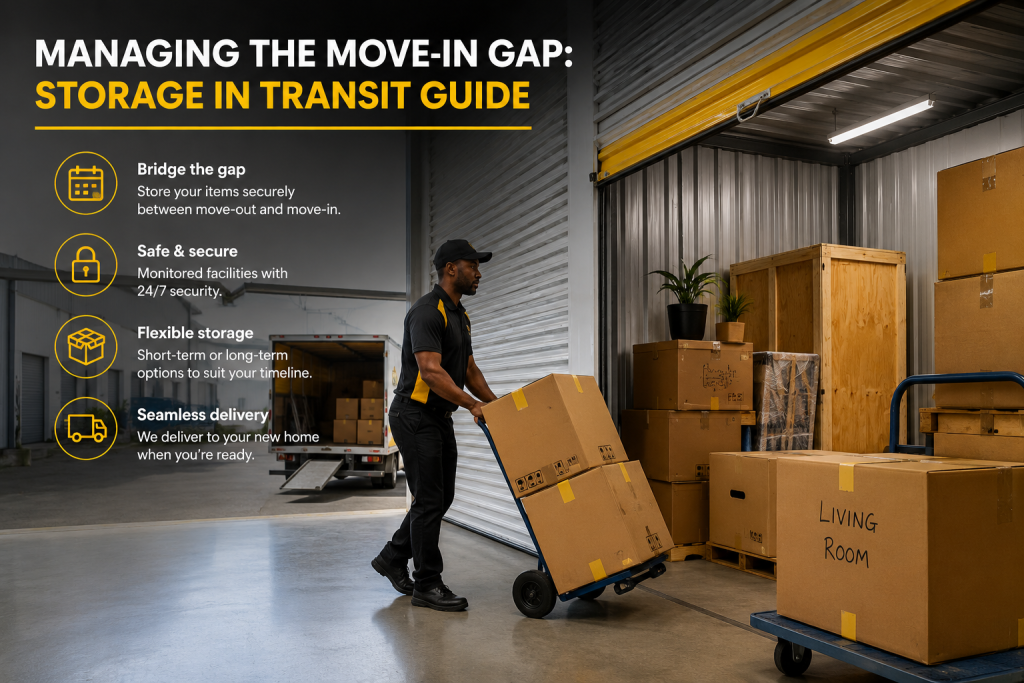
Managing the Move-In Gap: Why “Storage-in-Transit” is a Relocation Lifesaver
One of the most stressful challenges in any relocation occurs when calendar dates simply refuse to align. Your lease on your existing home ends on the 31st of the month, but the keys to your new property won’t be handed over by the attorneys until the 4th of the following month. Or perhaps you are executing a corporate transfer across the country, and your temporary accommodation is ready, but your permanent house won’t be available for another fortnight.
This common dilemma is known in the moving industry as the “Move-In Gap.”
Historically, solving this meant resorting to traditional self-storage units. Homeowners had to rent a truck, pack their belongings, drive to a self-storage facility, unload every single box into a roll-up unit, pay a full month’s rent, and then repeat the entire labor-intensive process a few days later. Fortunately, modern logistics offers a vastly superior, cost-effective alternative: Storage-in-Transit (SIT).
If you are navigating a tricky relocation timeline, this guide breaks down why integrated storage-in-transit is the ultimate lifesaver for your belongings, your sanity, and your moving budget.
The Flaw of Self-Storage During a Household Move
Self-storage facilities have exploded in popularity across South Africa’s major metros. While self-storage is an excellent long-term solution for clutter, excess business stock, or seasonal gear, utilizing it during an active household relocation is a fundamental operational mistake.
When you rely on self-storage during a move, you introduce three severe problems:
1. Double-Handling Means Double Damage Risk
In logistics, every single time a piece of furniture is lifted, loaded, turned down a hallway, or stacked in a truck, the risk of accidental damage increases exponentially. Moving into self-storage requires moving your household twice: once from Home A into the storage unit, and once from the storage unit into Home B. You are doubling the physical handling of your most valuable possessions.
2. Double Transport Costs
Hiring a moving truck to transport your goods to a self-storage facility on Tuesday, and then paying for another truck and crew to move those same goods to your final destination on Friday, effectively doubles your transportation expenditure. Furthermore, self-storage facilities require fixed monthly contracts—even if you only need the space for three days.
3. Exhausting DIY Labor
If you opt to handle the self-storage drop-off yourself to save on labor, you face hours of heavy lifting, organizing floor space, and securing adequate padding. When you return days later to reload, the exhaustion compounds.
What is Storage-in-Transit (SIT)?
Storage-in-Transit is an integrated logistical service provided by professional movers. Instead of treating storage and transportation as two separate events, SIT seamlessly combines them into a single continuous workflow.
Under a dedicated storage-in-transit solution, your moving team arrives at your original home, packs and loads your household into specialized wooden storage vaults or secure containers, and transports them directly to a private, controlled transit depot.
Your goods remain fully packed, wrapped, and protected inside those sealed vaults for the exact number of days required. When your new property is ready, the same moving team loads the vaults directly onto the delivery vehicle and offloads them into your new home.
You never have to step foot in a storage facility, buy secondary padlocks, or lift a single furniture item.
The Major Benefits of Integrated Transit Storage
Shifting from the self-storage mindset to a professional transit-storage model offers immediate practical advantages for both short-distance and long-distance relocations.
Single-Handling Protection
Because your furniture is loaded into secure transit vaults right at your front door, it is only packed once and unpacked once. Items remain protected inside heavy-duty furniture blankets and industrial wrapping throughout their stay in the warehouse depot. Eliminating the middle step of offloading into a garage-style unit minimizes surface wear, scratches, and structural strain.
Exact Daily Flexibility
Unlike commercial self-storage units that force you into rigid 30-day lease agreements, storage-in-transit is designed around custom moving schedules. Whether your move-in gap is 48 hours, a week, or a month, transit storage charges are structured around your precise timeline—ensuring you never pay for unused calendar days.
Integrated Long-Distance Logistics
The move-in gap is particularly acute during cross-country moves between major hubs. When transferring between provinces, transit delays, property transfers, or work start dates often conflict. Combining secure depot holding with professional long distance moving allows you to lock in guaranteed pickup and final delivery dates without worrying about where your goods sit during the journey.
Seamless Service Alignment
When one company oversees your move from end to end, accountability remains crystal clear. Your protection policies, inventory lists, and service agreements remain with a single service provider, completely avoiding the blame-shifting that occurs when third-party self-storage yards and independent truck drivers are involved.
When Should You Opt for Storage-in-Transit?
Storage-in-Transit isn’t just for multi-day calendar gaps. It is a strategic tool for various real-world moving scenarios:
- Renovations & Repairs: Your new home needs fresh flooring, interior painting, or electrical work completed before you move your furniture in.
- Uncertain Property Registrations: Bank clearances or deed office registrations run slightly behind schedule, pushing key releases back by a few days.
- Staggered Corporate Relocations: An executive moves immediately to start a new position in a new city, while the rest of the household stays behind briefly to finish out school terms or property sales.
- Local Metropolitan Transitions: Navigating tight lease turnovers within busy regional centers using dedicated local move services, where same-day handovers are physically impossible.
Ensuring Maximum Protection for Items in Storage
While transit storage eliminates the physical strain of moving twice, preparing your belongings correctly is still essential to ensure everything arrives at your new property in pristine condition.
First, ensure high-risk items like glass tables, plasma screens, and antique wooden furniture are treated with specialized materials. Utilizing professional packing and crating solutions guarantees that items resting in storage vaults maintain structural protection and remain free from moisture or friction damage.
Second, ensure that you keep essential personal items—such as identity documents, passports, financial files, medication, daily electronics, and primary clothing—out of the storage vaults entirely. Once your goods are vaulted in a secure depot, retrieving a single misplaced passport box requires unstacking containers and causes unnecessary delays.
Choosing a Verified Moving Partner
Not every moving operator possesses the infrastructure required to offer genuine storage-in-transit. When vetting potential providers for your upcoming move, look for these trust indicators:
- Private Depot Facilities: Confirm that the mover operates their own secure, fully enclosed warehouse depot rather than outsourcing storage to public parking lots.
- Comprehensive Security Controls: Ensure the facility features 24-hour physical security monitoring, perimeter alarms, and controlled access protocols.
- Clear Transit Guarantees: Partner with transparent operators who back their service schedules with concrete performance commitments and clear money-back policies across their total South African furniture removals operations.
Turn a Moving Gap into a Seamless Transition
A mismatch in property handover dates doesn’t have to ruin your relocation experience. By bypassing the double-handling trap of self-storage and choosing integrated Storage-in-Transit, you eliminate unnecessary labor, save money, and ensure your furniture rests safely until the moment you are ready to unlock your new front door.
